
Data Centers: What Real Estate Professionals & Home Buyers Should Know
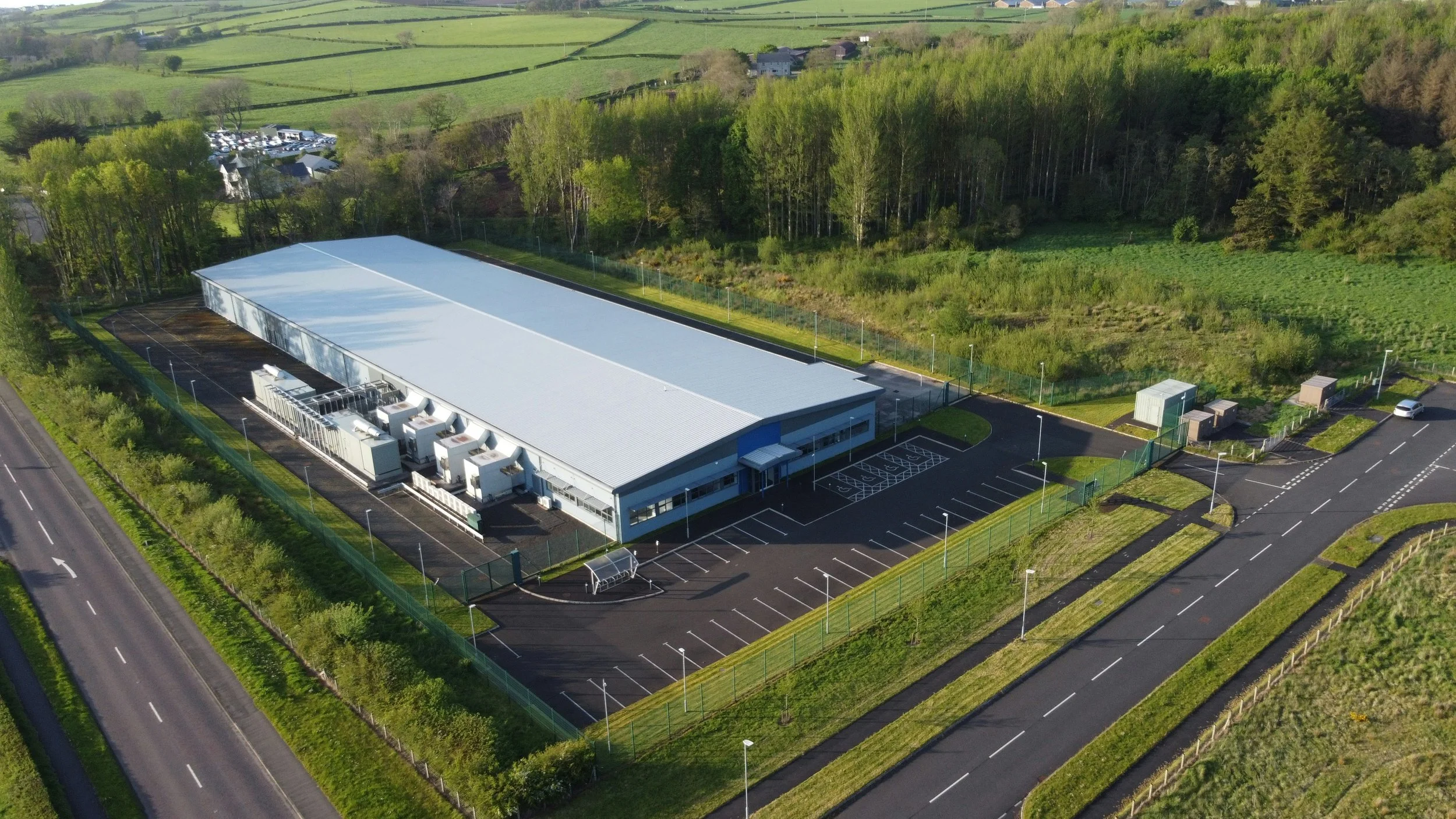
Data Centers are being built in even the most remote rural locations. Including the 10 Billion Amazon complex.
Data Centers are being built in even the most remote rural locations. Including the 10-billion-dollar Amazon complex. Data centers are appearing in more backyards than ever — Meanwhile, U.S. home sales within five miles of a large facility have more than doubled since 2018. Buyers are asking pointed questions: will a data center hurt my home's value? Will I hear it at night? Here's what the research actually shows, and what to check before your next listing conversation.
Data centers themselves rarely affect home values across the board — but proximity, noise, utilities, and local zoning details matter more than headlines suggest.
The real work for agents and homebuyers is verifying the project's status, distance, campus size, and type.
How Loud Is a Data Center From a Mile Away?
Noise is usually the first thing a buyer asks about, and it's a fair question — data centers run 24/7, and the constant hum of cooling fans and transformers is a different kind of disturbance than a one-time construction nuisance or community event. Sound drops fast with distance. Industry data puts continuous cooling noise around 70 decibels at 50 feet, fading to roughly 40 decibels by a half mile in open terrain — about the level of a quiet library. The bigger disturbance tends to come from periodic diesel generator load tests, which can carry nearly a mile in still night air, well past where the everyday hum disappears. A mile from a data center, the steady hum fades to near WHO's 40 dB nighttime health threshold — likely inaudible. But the periodic diesel generator tests are different: they carry almost a mile in still night air, and that's what triggers neighbor complaints. That distinction matters, and the question should be "Will I hear it and will the periodic testing bother me?" Prince William County, Virginia, one of the country's densest data center markets, has fielded resident complaints of noise routinely topping 60 decibels near existing facilities — a reminder that site-specific conditions, not national averages, decide the outcome.
One Region Does Not Fit All …(Data Centers)
Not all data centers are the same. Some older ones are water-cooled, and the newer ones use electricity to cool. Either way, there is no question the demand on regional resources is a new strain.
Yet consider the $10 billion Amazon Data center being built in Rockingham, North Carolina. (Roughly 20 buildings over 800 acres.) This particular N.C. region has abundant water, available land, and a county very hungry for tax revenue. Like many rural areas in N.C., the textile industry had diminished, and Rockingham desperately needed the revenue. Although several other proposals were being courted, it seems Amazon made the best offer for this region.
What Happens With Older Data Centers?
AI and new technology workloads need 5–10x the power density of older facilities. Data centers built 10–15+ years ago often have low ceilings, inadequate cooling paths, and electrical infrastructure that can't be retrofitted for liquid cooling or high-density racks. Combined with power availability, this is becoming the industry's biggest bottleneck; 2026 is being described as an "inflection point" where decommissioning older facilities is becoming routine. So what happens to aged-out data centers? This is decided in the original agreement with each region when it was approved. Clean-up is not a simple matter, and retrofitting to a new use is equally difficult. If the local county did not ask for end-of-use remediation when approved, the cost will most likely land on the tax bill.
Do Data Centers Lower Home Values?
Realtor.com's 2026 report found no statistically meaningful difference in home values or listing prices within two years of a facility opening, comparing 43 zip codes to matched control areas. Northern Virginia's severe housing shortage may be forcing buyers to be less selective, which could mask a negative effect a looser market would reveal.
A market-by-market industry analysis in Indiana found appreciation near four large facilities, ranging from 6 points below the county average to 17 points above it, depending on the county — a reminder that local supply and demand in housing will continue to drive outcomes more than the facilities themselves.
What to Check Before You List or Buy Near One
Data center due diligence looks less like predicting the future and more like verification. Risk and disturbance differ at each stage: proposed, approved, under construction, or operating. Pull zoning and planning records, and check for utility commission filings, especially in states seeing rate pressure from new data center demand. New York went further than most: in mid-2026, the state enacted a statewide moratorium on new data center construction (Executive Order No. 62) while it develops stricter siting standards — a sign of how fast the regulatory landscape can shift in some markets. Disclosure obligations vary significantly by state, so confirm requirements with your broker or counsel. Confirm project status — proposed, approved, under construction, or live — before predicting any impact. Note the distance and terrain between the property and the facility; open terrain carries noise farther than wooded or built-up buffers.
Check your state's disclosure requirements with your broker or counsel — they vary widely. Route technical questions (noise, water, air quality) to specialists or public agency data. Takeaway: Before you form an opinion on a nearby data center, do three things: verify the project's current status, and confirm the size and type being built with your local representatives. Above all, know your region. InGreenLiving helps agents ground their information in verified data, not headlines or specification sheets — professional real estate research for a rapidly changing marketplace.
World Health Organization, Night Noise Guidelines for Europe — source for the ~40 dB nighttime health threshold. who.int
Realtor.com, "Americans Aren't Moving Toward Data Centers, Data Centers Are Coming to Them" (2026) — source for the 43-zip-code comparison and the five-mile home-sales share rising from 0.67% (2018) to ~1.5% (2026). prnewswire.com
NYISO, Energy-Intensive Projects in NYISO's Interconnection Queue. nyiso.com
Lyver Data Center Noise Study, Prince William, Fauquier & King George Counties (2023). protectpwc.org
Integra Realty Resources appreciation study, as reported by WVPE (NPR member station). wvpe.org
