
A Standing Seam Metal Roof in Your Listing?
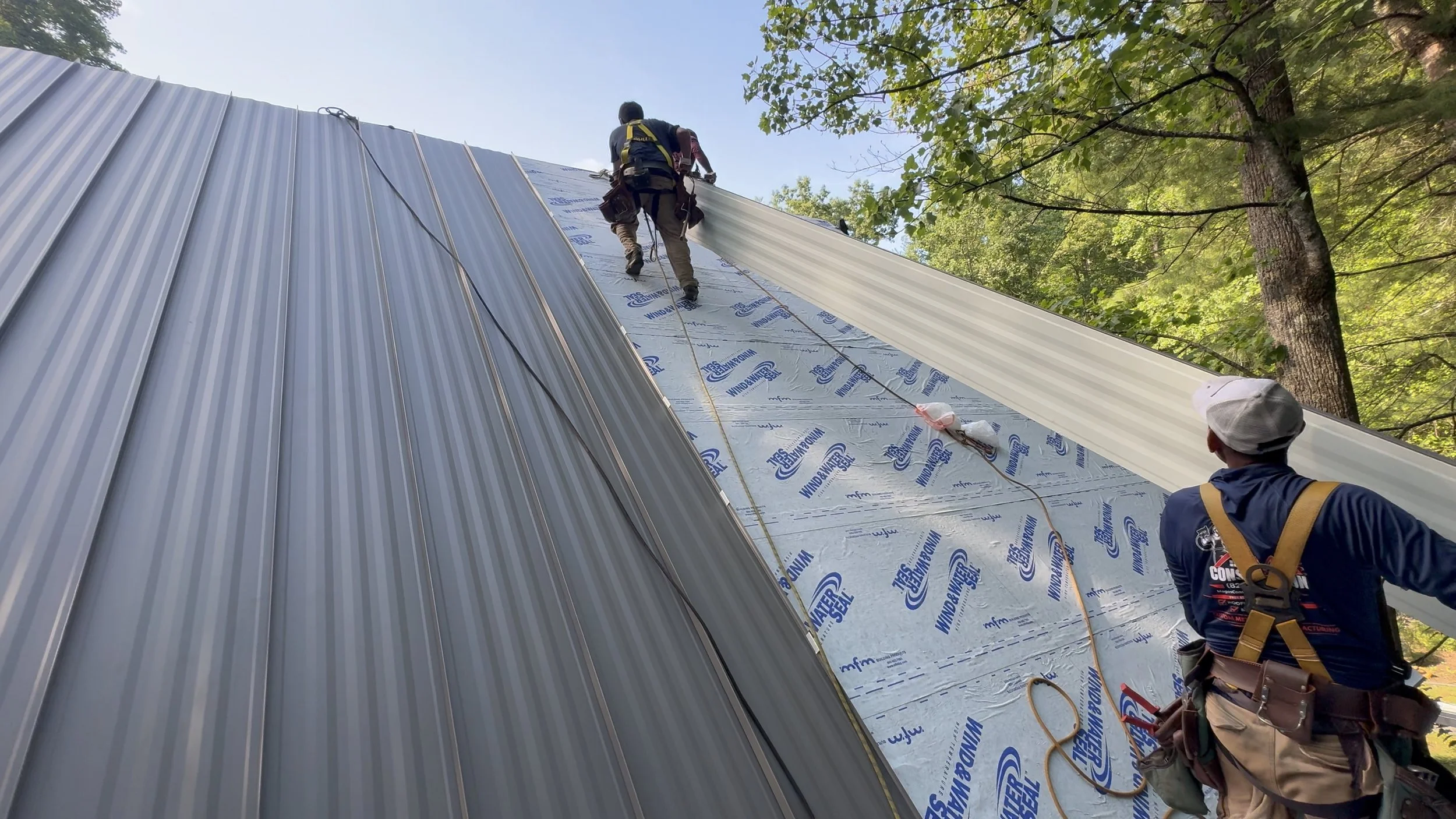
Install roof photography courtesy of Spring Roofs, Hendersonville, NC | springroofs.com
Today I spoke with Spring Roofs, a metal roofing company in North Carolina, that recently brought the value of standing seam metal roofing to my attention. I began looking into it and thought it would be a good idea to write an article about this style of metal roofing. Spring Roofs is a family company based in Hendersonville, North Carolina, and they serve all of Western North Carolina. Amanda and Andy own it together and opened in October 2024. They are both on-site while the work happens, have their own two crews, and one of the owners walks every roof before it is considered done. For more details on their installation methods, colors, or thickness, contact them directly.
Here's what to know about a standing seam roof.
Most people know about two types of roofing: asphalt shingles and corrugated metal. Standing seam is the third, and it's the one many have not been shown. What makes it standing seam is the seam itself. The panels lock together at raised seams that stand up above the water line, and the fasteners sit hidden underneath. Nothing holding the panel down goes through its face.
A shingle roof has thousands of holes driven through it to attach, and it sheds water using slope, overlap, and sealant. Leaks start when that sealant cracks. Corrugated metal, the through-fastened kind, has screws through the face of the panel with a rubber washer under the head. Metal flexes up and down with the heat of the sun every day, and that screw pinning it down will too.. Standing seam is watertight rather than water-shedding. Hemmed eaves, rake closures, panels locked into one sealed surface. The clips let each panel move with the heat instead of fighting it.
Longevity — the real green value story
Asphalt shingles typically last 15 to 30 years. Metal roofs far exceed that, with standing seam at the most durable end — a longevity point documented by insurers with no stake in selling roofs, such as State Farm.
And every one of those asphalt roof tear-offs has to go somewhere to get rid of. The EPA estimates 11–13 million tons of asphalt shingles are stripped off U.S. roofs each year, and roughly 90% is landfilled. The greenest thing about a long-lived roof isn't recycling — it's the replacements that never happen.
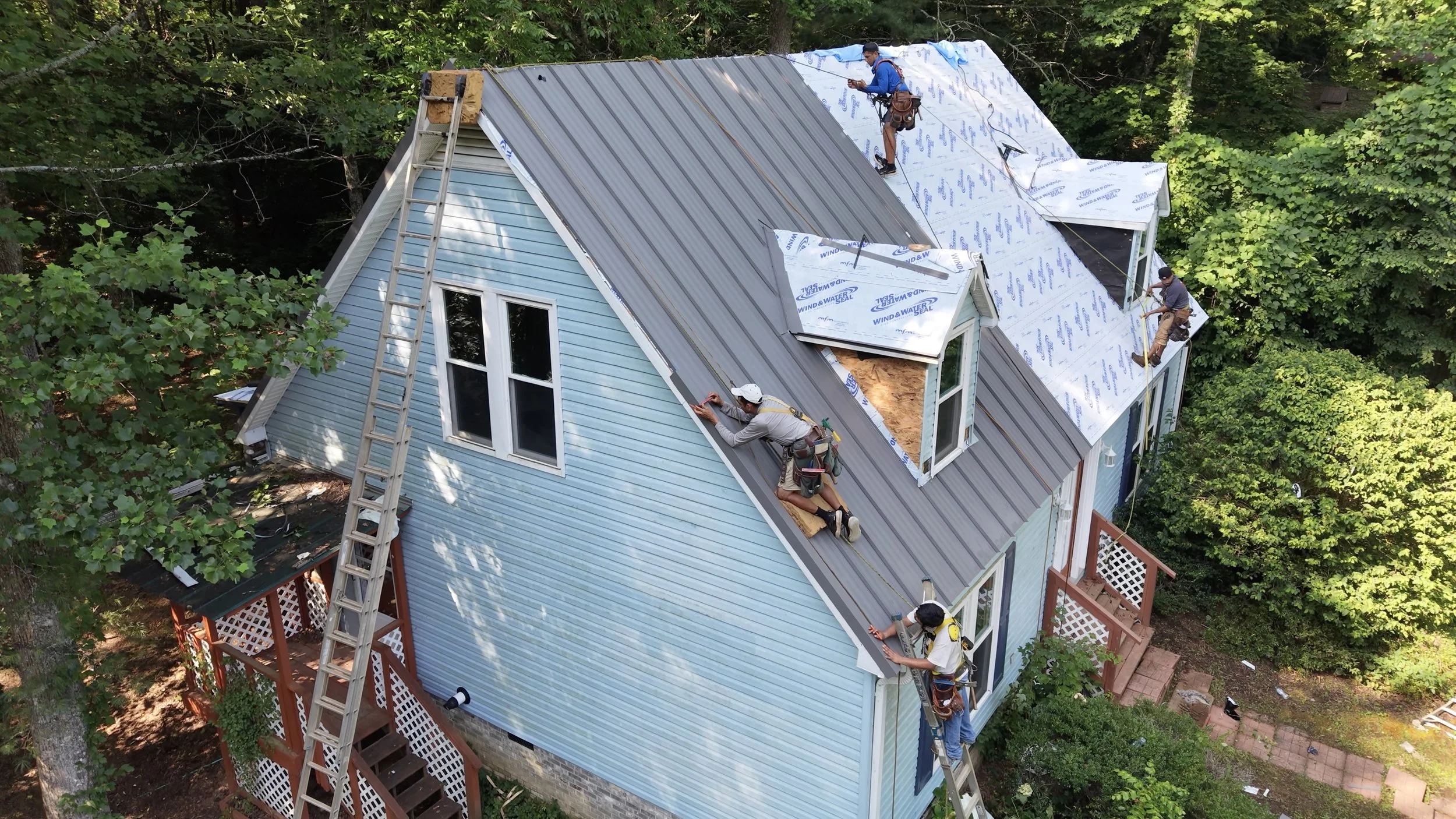
Install roof photography courtesy of
Spring Roofs, Hendersonville, NC | springroofs.com
A green value a buyer can see
A roof is visible from the driveway and often verifiable on paper, is a strong sustainability point to note.
Standing seam systems commonly carry long-term warranties, and many will transfer to the next owner — the kind of document an agent can provide a buyer. Terms vary by manufacturer, so confirm the actual warranty on the specific roof and the installation date. Verify it and provide it for your buyer.
For the agent, the reframe is simple: a lasting investment in value.
The value over time
Metal costs more upfront than asphalt. But asphalt shingles are a petroleum product, so their cost rides crude-oil and materials markets, and those have climbed hard: construction materials ran 43.4% higher in November 2025 than in February 2020 (NRCA, citing Bureau of Labor Statistics data).
It's a premium roof bought once against a lower-cost roof that may have to be done twice or more times.. Framed across a realistic period, the value increases — a point a seller's client will appreciate in resale value.
Built for weather
This is where the roof becomes a site decision — outside-in, before it's ever a finish decision.
Fire. Steel is non-combustible, and standing seam assemblies routinely earn a Class A rating — the highest under the UL 790 standard — a genuine advantage in wildfire country.
Snow. Smooth, continuous panels shed snow instead of trapping it, reducing the load on the structure and the conditions that form ice dams. It's why metal is a mountain-country staple.
Wind. Standing seam systems are engineered to meet demanding wind-uplift codes, which is why they're favored across hurricane and high-wind regions.
Heat. Reflective metal and cool-roof coatings re-emit solar energy that asphalt absorbs and holds; the U.S. Department of Energy notes cool roofs can cut cooling energy use by up to roughly 15% on some buildings.
What a realtor should know
It's a lasting value — one that will likely not need replacement.
If there's a warranty, it may transfer to the buyer; confirm it.
Shingles are a petroleum product, so their cost rises with oil. Thus, the initial cost difference between the two is shrinking.
The takeaway
When a standing seam metal roof is in your listing, don't pass it off as a maintenance line item. Note it in the listing — "Standing seam metal roof, transferable warranty" — and point it out at the street, where the buyer can actually see it. It's a lasting, low-waste roof built for the site it sits on, and it holds up to the value questions a discerning buyer will ask.
A standing seam metal roof outlasts asphalt roofs. When it is in your listing, it's an asset to highlight—a lasting, low-waste roof, not just a line entry in the inspection.
Sources
EPA shingle-waste estimate (epa.gov); U.S. Department of Energy, cool roofs (energy.gov); construction-materials price index — NRCA citing BLS/ABC PPI data (nrca.net); roof-lifespan figures — State Farm (statefarm.com/simple-insights/residence/metal-roof-pros-and-cons); UL 790 fire-rating standard.
