
Hemp-Based Wood: What Buyers and Real Estate Professionals Should Know.
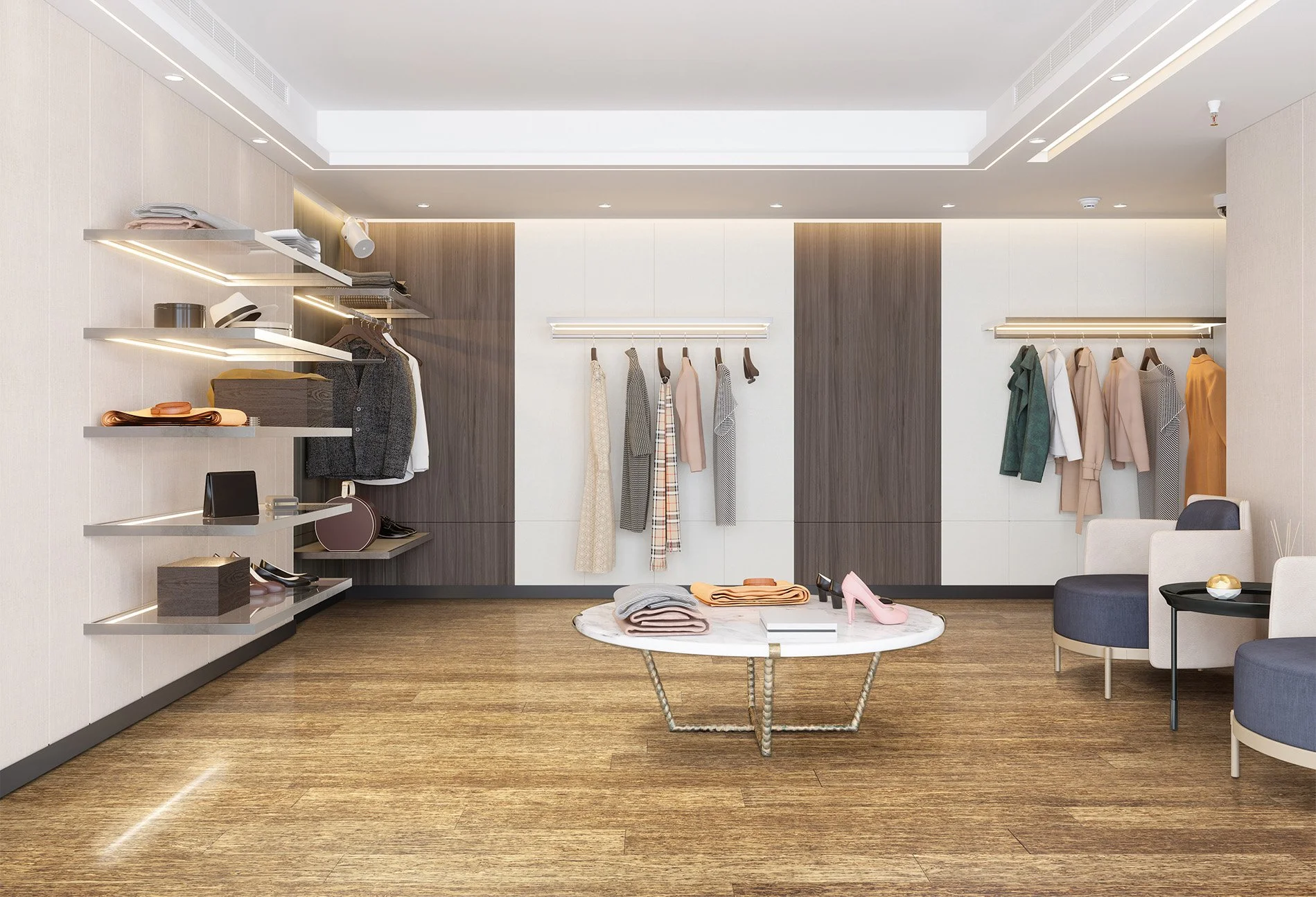
Hemp wood being used in wall panels, flooring and more in this commercial application.
Here's what hemp-based hardwood is, and how to speak to it with authority.
Situation: A buyer is at a showing and asks, "Is this the floor that is listed as made from hemp?" It's a fair question, and an increasingly common one. Hemp-based engineered hardwood is now produced by several U.S. companies, and knowing the material itself — separate from any one brand — lets you answer with real authority instead of an eco-friendly sales pitch.
Article Bottom line: Hemp-based hardwood is an engineered wood alternative made by pressing fibrous hemp stalks into board form. Independent research shows the plant grows fast and stores substantial carbon as it grows. One well-known brand, HempWood, is produced by Fibonacci, LLC in Murray, Kentucky — it's a great example of high-end building products, not to be confused with Hemp wood as the broad category.
What Is Hemp-Based Wood
Before naming any one brand, it helps to know the material on its own terms.
What it's made of. Hemp-based hardwood is an engineered wood product: the fibrous stalks (hurds) of the industrial hemp plant are crushed and pressed with a binder into boards, similar in concept to how other engineered woods are made from wood fiber.
How fast it grows. Industrial hemp is a rapidly renewable crop with roughly a four- to five-month growth cycle from planting to harvest — compared to the decades a hardwood tree needs to mature.
What it does for carbon. Research from the University of Cambridge's Center for Natural Material Innovation found industrial hemp absorbs roughly 8 to 15 tonnes of CO2 per hectare of cultivation, versus 2 to 6 tonnes typically captured by forests over a comparable period — making it, by that measure, more carbon-efficient per acre than trees.
What it is not. Industrial hemp is legally defined and regulated separately from marijuana. Under the federal Farm Bill, it must contain no more than 0.3% THC by dry weight — far below any intoxicating level. It is an industrial building material, not a cannabis product.
Who makes it. Several U.S. manufacturers now produce hemp-based engineered wood for flooring, paneling, and furniture; HempWood is a well-established example, produced by Fibonacci, LLC.
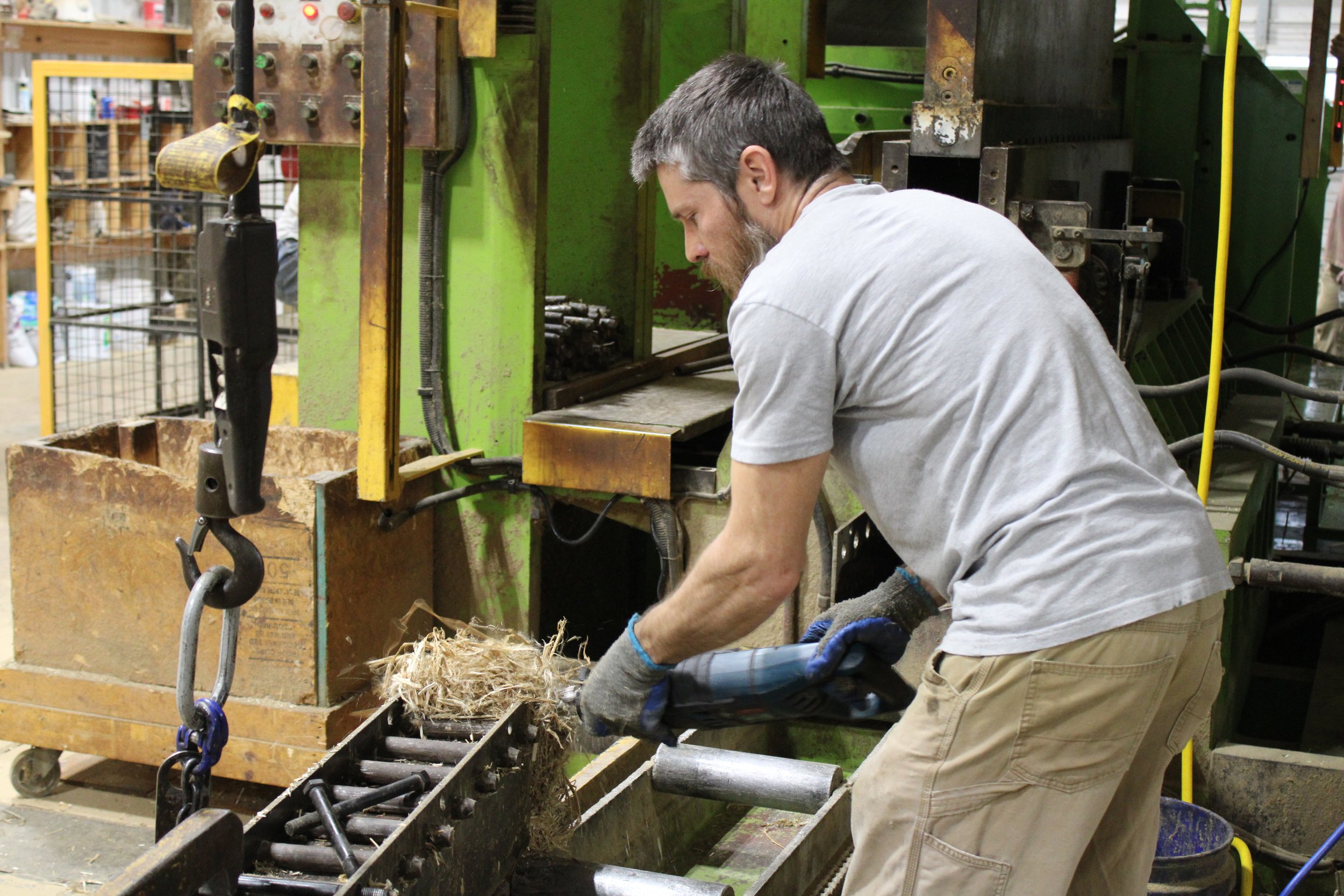
HempWood in production. A sustainable business direct from the field for many types of building products.
“HempWood”, by Fibonacci, LLC
If your listing specifically names HempWood, here's what to know about the company behind it. HempWood is a branded product of Fibonacci, LLC, based in Murray, Kentucky, which began fulfillment in the third quarter of 2019. According to the company, it is engineered for use as flooring, wall paneling, cabinetry, furniture, and trim.
The manufacturer reports a Janka hardness rating — the industry-standard test for a wood's resistance to denting and wear — of roughly 2,200 lbf, which the company states is about 20% harder than American hickory and meaningfully harder than white oak. The company also positions HempWood as price-competitive with domestic hardwoods like white oak. These are manufacturers' figures, so it's worth presenting them as HempWood's own stated specifications rather than third-party-confirmed facts. As always, have the company website and/or brochure on all newer-to-market products. HempWood’s website:
https://hempwood.com/en-us?srsltid=AfmBOorGdIQxieTRwPG2zxbiLHway13RhaLzEmsB2uxj6LMwafE5PdLF
HempWood makes five product lines, all from the same hemp composite material.
Flooring — their flagship product, marketed as "Organic Flooring."
Lumber — boards for general construction and building projects.
Panels — used for cabinetry, shelving, and paneling.
Furniture — finished pieces (tables, desks) sold directly.
Stairs- solid engineered with stair noses availabl
Notably, their glue process is health-focused. This is soy-based with NO added formaldehyde or VOC emissions. For residential, commercial, or hospitality, it is hard not to be a fan of this renewable building material. Not to mention the appearance and durability. HempWood's extensive website includes beautiful images as well as substantiated data,
How to present it at a Showing
What a Realtor or Buyer Should Know About Hemp
It's a legitimate building material, not a cannabis product. Industrial hemp is capped at 0.3% THC by federal law — far below any intoxicating level.
It grows fast. Roughly a four- to five-month cycle from planting to harvest, versus decades for a hardwood tree.
It has a genuine sustainability story. Hemp-derived materials are used across construction as hempcrete (a lime-and-hemp insulating masonry), hemp fiberboard and wall panels, hemp-based insulation (comparable in performance to fiberglass), and engineered hardwood for flooring, cabinetry, and furniture.
Brand matters. "Hemp" describes the plant itself; performance specs — hardness, R-value, price — vary by manufacturer and should be sourced from that company's documentation, not assumed from the material category. If it's branded HempWood specifically, the manufacturer reports it as roughly 20% harder than hickory. (Janka hardness is the standard industry test for how hard a wood or wood-like flooring material is — specifically, its resistance to denting and wear.)
It's worth verifying at the listing level. Confirm the specific product and brand with the seller, and ask for any specification sheets or certification before assuming performance numbers as a buyer or real estate professional.
A few practical steps will keep you accurate and avoid using an eco-friendly adjectives. Confirm with the seller of the property that the material is genuine branded HempWood — or name the actual manufacturer, if different — rather than a generic "hemp wood floor." Ask whether any product documentation, spec sheet, or warranty paperwork exists. And separate what's independently documented from what's the manufacturer's own claim, like the specific hardness number, so you're never overstating what you know for fact.
A Note from In Green Living
At In Green Living, we help real estate professionals and buyers turn "sustainable" into something a client can see, touch, and verify. Hemp-based hardwood is a genuine example of that — a fast-growing, carbon-absorbing crop turned into building materials. This business is circular, producing from the field to returning biochar to the land. Not to forget mentioning...American-made.
