
Site Orientation: The Luxury Home Value Most Agents Miss
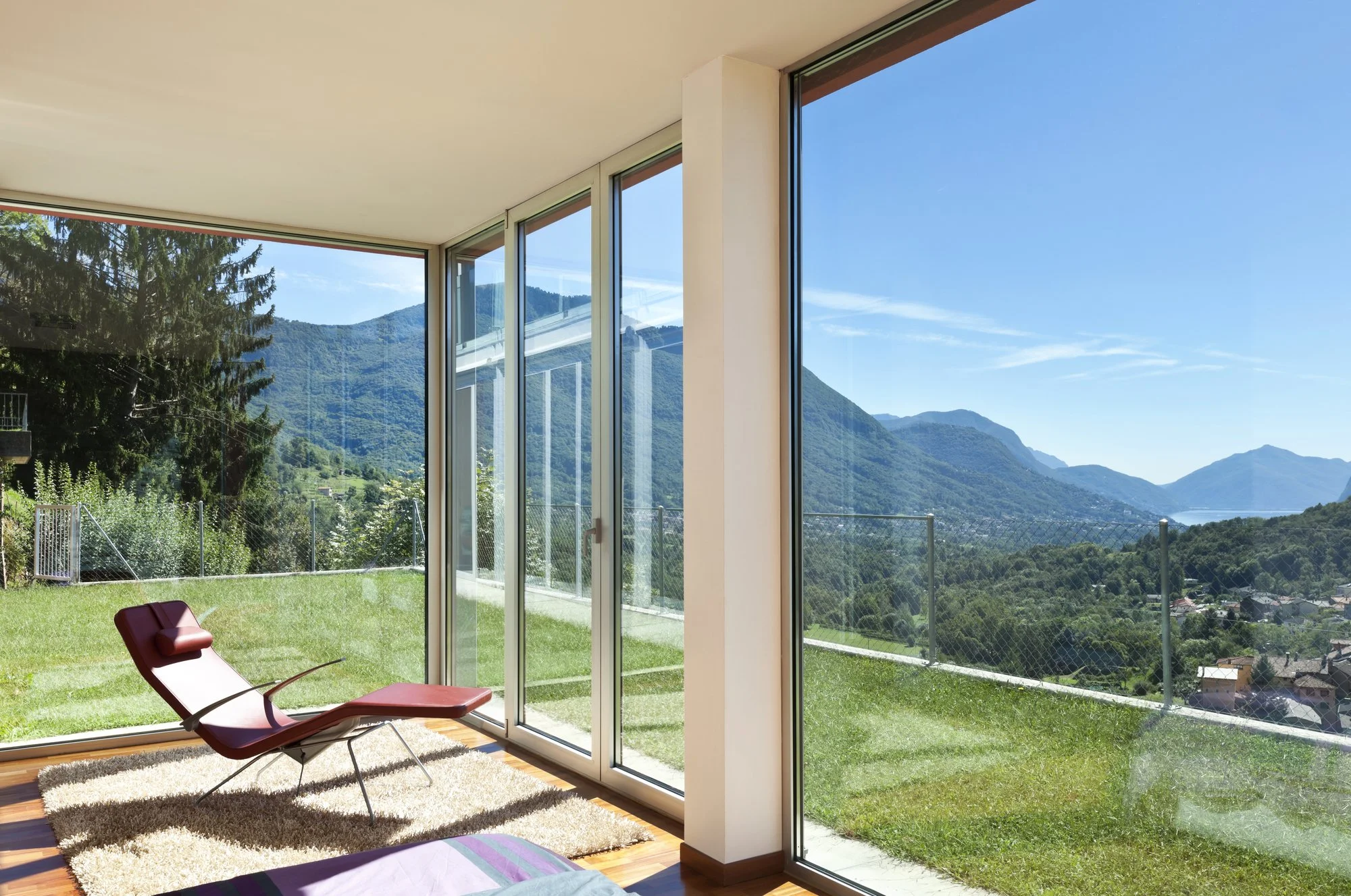
Passive solar and site orientaion: a sustainable value not to miss in a R.E. listing.
Real Estate Sustainability in D.E.P.T.H. — This week: Design
A kitchen can be gutted and rebuilt. A primary suite can be reimagined. Landscaping matures, finishes get refreshed, and square footage can even be added. But there is one characteristic of every property that no renovation budget can change: the direction the house faces and how the sun moves across its site. Orientation is fixed on the day the foundation is poured — and for the buyer or agent who understands it, optimizing it is where the value lies.
This is the heart of outside-in evaluation. Before we talk about cabinetry or countertops, we talk about light — because light is the one luxury that arrives free, every day, for the life of the home, but only if the site was read correctly to begin with.
Passive and active solar are not the same conversation
Most real estate conversations are about "solar" panels — an active system bolted onto the roof to generate electricity. That's a real and measurable asset, and we'll get to the numbers. But the more sophisticated story, and the one most agents leave on the table, is passive solar: the home's ability to capture, store, and release the sun's heat through its orientation, window placement, and materials, with no mechanical system at all.
The U.S. Department of Energy defines a well-designed passive solar home as one that first reduces heating and cooling loads through efficiency, then meets part of that load with sunlight — typically through glazing oriented within 30 degrees of true south, paired with thermal mass that stores daytime heat and releases it after dark. Done well, the effect is substantial. The American Solar Energy Society notes that homes with thoughtful south-facing glazing can draw a meaningful share of their winter space heating directly from the sun. And analyses of orientation alone — simply siting a home to work with the sun's path rather than against it — point to heating-energy savings on the order of 10 to 20 percent, and more in the right climate, before a single panel or upgrade is added.
That distinction matters commercially. Active solar is an improvement — something a seller added and can quantify. Passive solar performance is intrinsic — something the site was either designed to deliver or it wasn't. The first can be replicated on any roof. The second cannot be bought later at any price. For a luxury buyer seeking to protect a long-term investment, the intrinsic asset is the rarer and more defensible one.
What the market actually pays for
Here, the evidence is clear. The most authoritative study to date, Lawrence Berkeley National Laboratory's Selling Into the Sun, examined nearly 23,000 home sales across eight states and found buyers consistently paid a premium of roughly $4 per watt of installed solar — about $15,000 for a typical system — regardless of state, market, or home type. Zillow's national analysis reached the same conclusion from a different angle: homes with solar sold for about 4.1 percent more than comparable homes without it, and more than 80 percent of buyers said energy-efficient features mattered to their decision. More recent work analyzing California sales puts the owned-system premium at 5 to 10 percent of value.
Two caveats keep this honest. First, transferred contracts don't reliably add value and can complicate a sale. Second, bigger is not better in proportion — a system sized to the home's actual needs captures the premium without the diminishing returns of oversizing.
Demand is also moving, not static. Zillow found that the share of buyers calling an energy-efficient home very or extremely important climbed from 56 percent in 2019 to 67 percent two years later, and that listings highlighting eco-friendly features can sell measurably faster. That trend rewards the agent who knows how to name these assets in a listing — and quietly penalizes the one who lets them go unmentioned.
How to market what buyers can't see
Orientation and passive performance are invisible on a floor plan, which is exactly why they're underpriced — and why the agent who can surface them holds an advantage. A few moves:
Lead with the site in the narrative
Note the south-facing exposure, the winter sun that fills the main living spaces, the deep overhangs or mature deciduous trees that shade the glass in summer. These aren't green talking points; they're comfort and operating-cost arguments a luxury buyer respects.
Separate the free asset from the added one
Tell the buyer plainly which value is intrinsic to the site — orientation, daylight, natural cooling — and which was installed: panels, batteries. That clarity is the opposite of greenwashing, and high-net-worth buyers reward it with trust.
Quantify where you can, soften where you can't
"South-facing glazing with proper summer shading" lands harder paired with a credible energy-cost picture. If a figure can't be backed by a clean source, soften it rather than inflate it.
Treat orientation as permanence
In a market increasingly conscious of energy costs and climate resilience, the home that was sited correctly carries an advantage competitors literally cannot renovate into existence. That's a luxury argument, not an environmental one.
The takeaway
The most valuable conversation about a property is decided before the first wall goes up. Passive solar performance and site orientation sit at the top of the value hierarchy precisely because they're irreplaceable — and the professional who can read them, name them, and price them is selling intelligence the rest of the market is still giving away. The sun is free, but understanding what it's worth is priceless
At InGreenLiving, eco-stewardship is knowing where the true value lies in a green home and being able to explain it. Join our list for Sustainable Property Reviews, Green Hot Sheets, and — above all — our Newsletter featuring the latest news in luxury real estate with sustainable features.
